
Written by Dr. Shilpa Reddy T, MBBS, DNB Pediatrics, IDPCCM — Consultant Paediatrician & Paediatric Critical Care Specialist, Tiny Totz Kids Clinic, Puppalaguda, Hyderabad
If your child has had cough or cold every two to three weeks for the past few months, and you've been back to the doctor repeatedly for the same antibiotics and cough syrups, and nothing is actually fixing it you're probably right to wonder whether something else is going on.
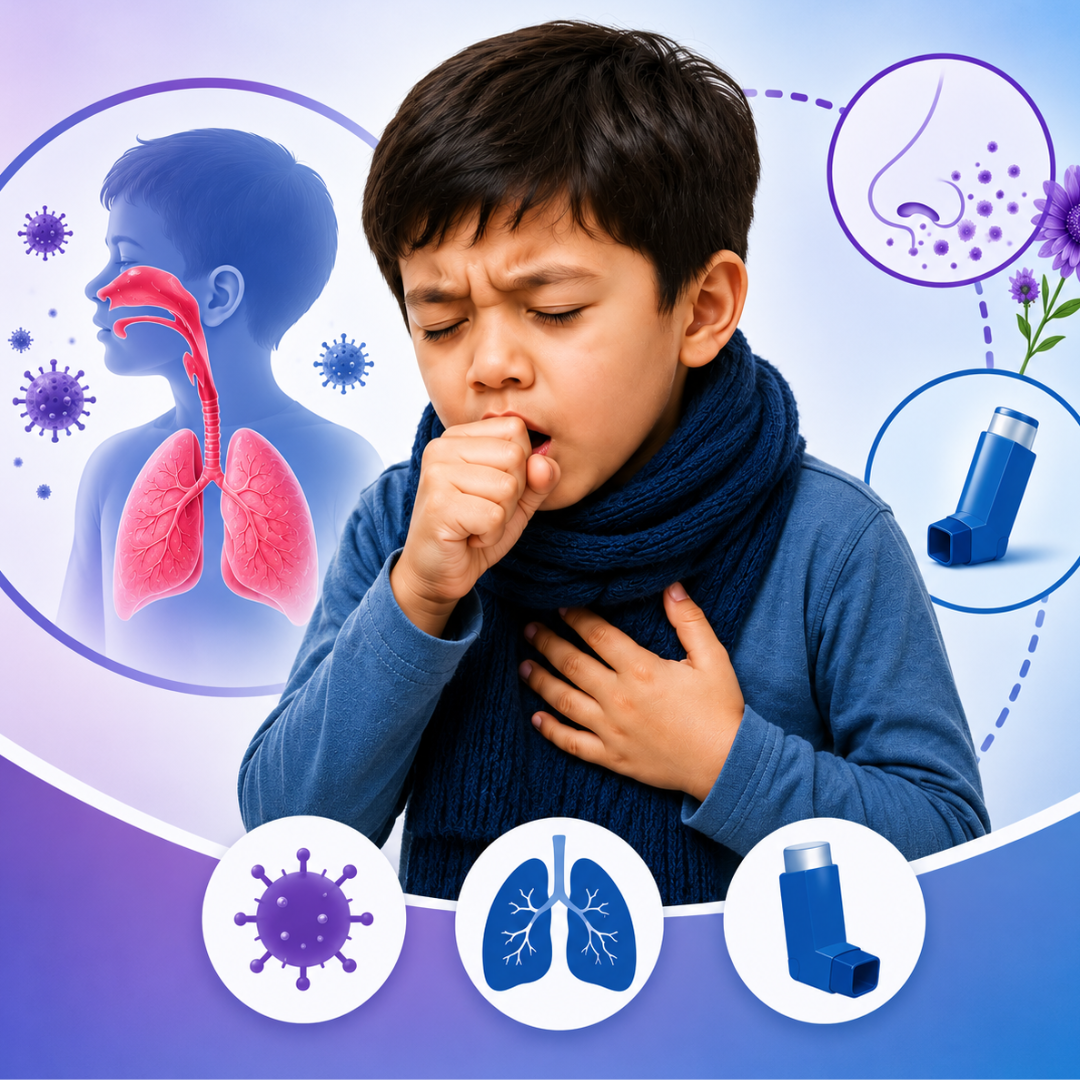
Recurring respiratory symptoms in children are one of the most common reasons families come to Tiny Totz Clinic and one of the most common scenarios where parents have been told 'it's just a viral infection' for months, when in fact there's an underlying allergy or early asthma that nobody has addressed.
Young children, especially in daycare or preschool, can get 6 to 8 viral respiratory infections per year. Each lasts 7 to 10 days. This is normal immune development. But these patterns suggest something beyond repeated simple infections:
Puppalaguda, Manikonda, and the Financial District corridor are affected by construction activity, ORR traffic, and indoor dust from new apartment buildings. The IAP has issued consensus statements noting that rising urban air pollution is a major driver of childhood respiratory allergies and asthma in Indian cities. Fine particulate matter damages the mucociliary clearance system and makes airways more sensitive to common triggers like dust mites, pollen, and mould.
A child growing up in this catchment with a family history of allergy or asthma is at meaningfully higher risk. This is a practical reason to investigate persistent cough rather than just treat it.
Allergic rhinitis (nasal allergy)
Inflammation of nasal passages in response to allergens most commonly house dust mites, mould spores, pollen, pet dander. Symptoms: persistent runny or blocked nose, sneezing, itchy nose and eyes, post-nasal drip causing cough, mouth breathing. Unlike a cold does not resolve in 7–10 days, persists for weeks or months in the presence of the allergen.
Cough-variant asthma
In children particularly in India — asthma does not always present as classic wheezing breathlessness. A dry cough worse at night, worse with exercise, triggered by cold air or dust, recurring without fever, may be the only manifestation. IAP guidelines explicitly note this pattern. Cough can be the sole presenting feature of asthma in children and is frequently missed because the clinician is looking for wheeze that isn't there.
Classic asthma
Episodes of wheezing, shortness of breath, chest tightness, and cough — variable, recurring, triggered by infections, exercise, allergen exposure, or weather change. The child is well between episodes.
When it's adenoids
Chronic nasal blockage, mouth breathing, snoring, frequent 'colds' that don't fully clear, and a night cough worse lying down should trigger evaluation for adenoid enlargement. Common and treatable — a reservoir for bacteria blocking airflow and creating recurrent upper respiratory symptoms.
Allergy is not an infection. Antibiotics do not treat allergic rhinitis or cough-variant asthma. Giving antibiotics for what is actually allergy achieves nothing for the underlying cause, causes side effects, and contributes to antibiotic resistance. If your child has had three or more antibiotic courses for the same recurring symptoms with no sustained improvement — an allergy and asthma assessment is overdue.
History and examination are the most important tools — what triggers the cough, when it happens, whether there is wheeze. For children above 5 who can cooperate, spirometry can confirm reversible airflow obstruction — the hallmark of asthma. For younger children, diagnosis is based on clinical pattern and response to a treatment trial. Allergy testing — skin prick tests or specific IgE blood tests — identifies specific triggers and enables targeted environmental modifications.
If your child has been coughing or having cold-like symptoms for more than a month without clearing, or if the pattern keeps repeating without full recovery between episodes, come in for a proper respiratory assessment — at the evening OPD, no need to take time off work. Monday to Friday, 6:00 PM to 9:00 PM, Puppalaguda. Call or WhatsApp +91 7815933120.
1. My child gets a cough every time the weather changes. Is that normal?
A: Weather changes are well-recognised triggers for asthma and reactive airway disease. A child who consistently gets cough with weather change — without other signs of a viral infection — should be assessed for airway hyperreactivity.
2. Can a child outgrow asthma?
A: Many children with mild asthma have fewer symptoms as they grow older. However, asthma rarely disappears entirely — it can become subclinical or well-controlled. Managing it properly prevents irreversible airway remodelling from repeated untreated inflammation.
3. Is it safe to use an inhaler in a child?
A: Yes. Inhaled medications are the safest and most effective delivery method — medicine goes directly to the airway with minimal systemic absorption. Inhaler with spacer is the preferred device for children under 5. I demonstrate correct technique at every visit.
4. Should I keep my child away from dust completely?
A: Complete avoidance is impossible — but targeted measures make a real difference. Mite-proof mattress and pillow covers, reducing soft toys in the bedroom, washing bedding weekly in hot water, good ventilation, and addressing damp patches are the most evidence-backed steps.